“Your Cycle Isn’t Random: What Your Period Might Be Trying to Tell You”
Introduction
After a while, many women stop questioning their cycle.
It comes. It goes.
Sometimes it’s painful. Sometimes it’s heavy.
But it’s familiar enough to feel normal.
So it’s left alone.
But your cycle is not random.
And when something changes, your body is usually responding to something deeper.
Your Cycle Reflects More Than You Think
A menstrual cycle is not just about bleeding.
It reflects a complex interaction of hormones, mainly estrogen and progesterone, which regulate ovulation, the uterine lining, and timing of your period.
When these hormones are balanced, cycles tend to feel predictable.
When they are not, your body shows it.
What Affects Hormonal Balance
Hormones are sensitive.
They respond not just to biology, but to how you live, what you eat, and what your body is exposed to.
💊 1. Hormonal Contraception (The Pill)
The contraceptive pill works by altering natural hormone levels to prevent ovulation.
While it is effective, it can also:
- Change bleeding patterns
- Mask underlying cycle irregularities
- Influence mood and energy in some women
In simple terms:
The pill doesn’t “fix” the cycle, it controls it artificially
🧠 2. Stress
Stress is one of the most powerful hormonal disruptors.
When stress levels rise, the body increases cortisol, a stress hormone.
This can interfere with reproductive hormones and lead to:
- Irregular periods
- Missed cycles
- Worsening pain or symptoms
Your body prioritises survival over reproduction when stressed.
🥗 3. Nutrition
What you eat directly affects hormone production.
- Poor nutrition → reduced hormone support
- High sugar intake → insulin fluctuations
- Low iron → fatigue and cycle disruption
Balanced nutrition supports stability.
🏃🏽♀️ 4. Lifestyle and Physical Health
Lifestyle patterns matter more than we often realise.
- Lack of sleep affects hormone regulation
- Excessive exercise or very low body weight can disrupt ovulation
- Sedentary lifestyle may contribute to hormonal imbalance
The body responds to consistency.
💼 5. Work and Daily Demands
Chronic workload, irregular schedules, and mental strain all affect the body.
Long term strain can:
- Disrupt sleep
- Increase stress hormones
- Affect cycle regularity
And often, these effects are gradual.
What Changes in Your Cycle Can Mean
When these factors shift, your cycle responds.
You may notice:
- Irregular timing
- Heavier or lighter bleeding
- Increased pain
- Missed periods
These are not random.
They are responses.
A Pattern I See in Practice
As a doctor, I often see women noticing these changes but not connecting them.
The cycle changes, but the cause is not explored.
Because it feels easier to assume it’s just “one of those things.”
But the body rarely changes without a reason.
🌿 Supporting Your Hormones Naturally
You cannot control everything, but you can support your body.
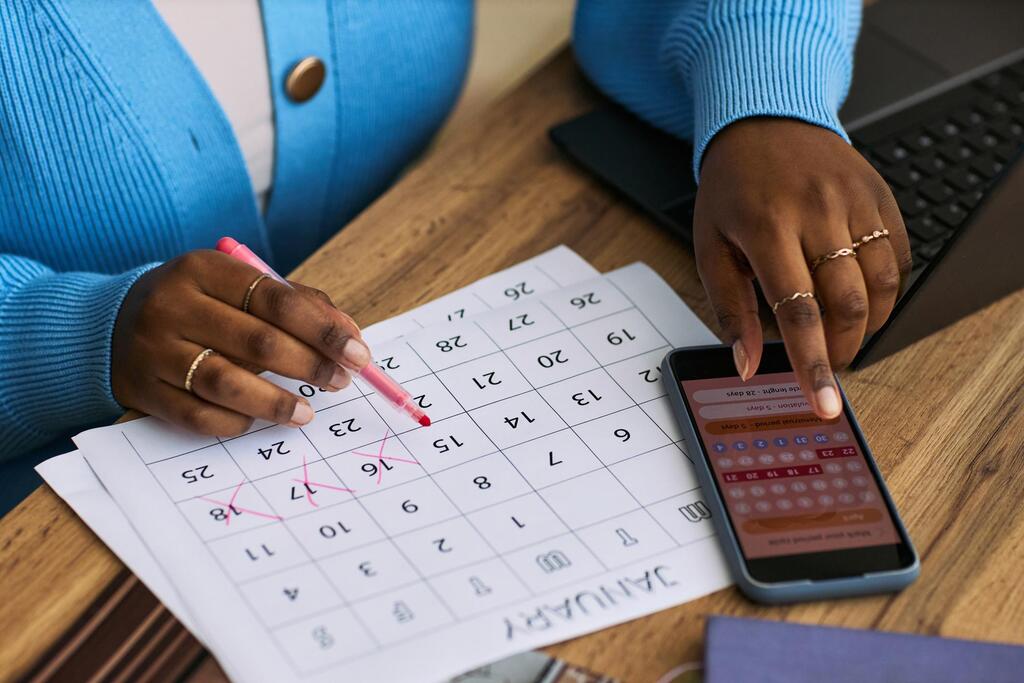
📝 1. Track Your Cycle
Patterns reveal more than memory ever will.
🥗 2. Eat to Support Hormones
Focus on:
- Whole foods
- Healthy fats
- Iron-rich foods
- Balanced meals
🧘🏽♀️ 3. Manage Stress Intentionally
Even small habits help:
- Walking
- Prayer or mindfulness
- Time away from constant stimulation
🛌 4. Prioritise Sleep
Sleep is one of the most underrated regulators of hormones.
⚠️ Important Note
Not every change means something serious.
But repeated or worsening changes should not be ignored.
Hormonal shifts are not random.
They are responses to internal and external factors.
What You Should Do
- Pay attention to your cycle
- Notice patterns and changes
- Consider lifestyle and stress factors
- Seek medical advice when changes persist
- Ask questions about your hormonal health
Conclusion
Your period is not separate from the rest of your life.
It reflects it.
From stress to nutrition to daily habits, your body is constantly responding.
And your cycle is one of the clearest ways it shows you.
📚 References
- World Health Organization (WHO) — Reproductive health
https://www.who.int - American College of Obstetricians and Gynecologists (ACOG) — Menstrual cycle and hormonal health
https://www.acog.org - Practice Committee of the American Society for Reproductive Medicine — Menstrual cycle as a vital sign
https://pubmed.ncbi.nlm.nih.gov/19632686/ - Berga SL, et al. Stress and reproductive function
https://pubmed.ncbi.nlm.nih.gov/18423624/
Written by Dr. Nozithelo Moyo, Medical Doctor and Medical Writer.