Searching Symptoms Online: When AI Feels Right but Gets It Wrong
Introduction
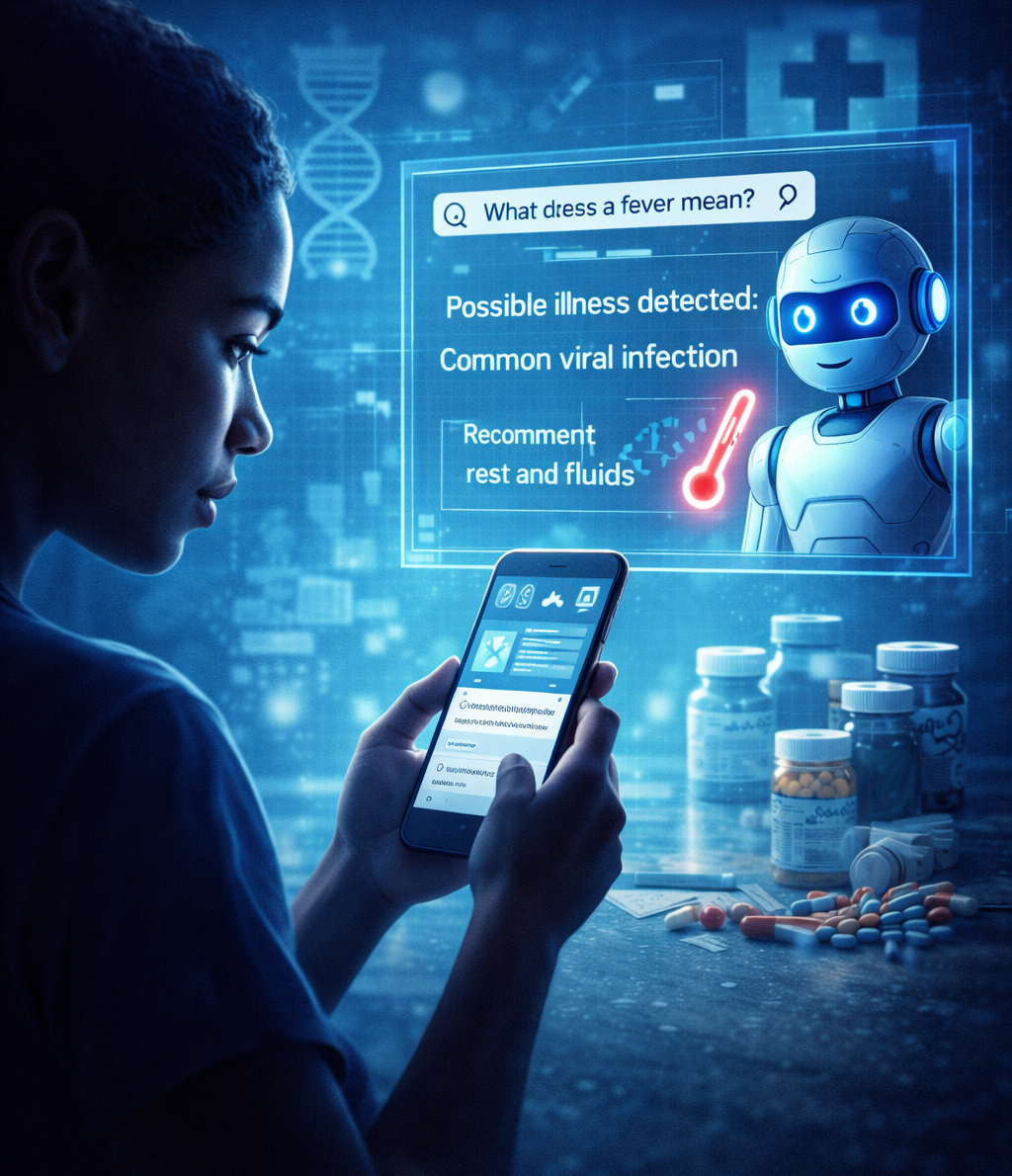
There was a time when searching for symptoms meant navigating through multiple sources, comparing information, and trying to make sense of what might be wrong.
Now, that process feels almost effortless.
A question is asked, and within seconds, a structured response appears, often detailed, confident, and reassuring. It feels clear, and in many cases, it feels sufficient.
And that is exactly where the risk begins.
Why People Are Turning to AI
The increasing use of artificial intelligence in health related decisions is not difficult to understand. It is quick, accessible, and removes many of the barriers associated with traditional healthcare, such as waiting times and limited availability.
For many individuals, particularly in settings where access to care is constrained, it provides an immediate alternative that feels both practical and empowering.
It also offers a level of privacy that allows people to ask questions they might otherwise avoid.
While these advantages make AI appealing, they can also create a level of confidence that is not always supported by clinical accuracy.
Where the Problem Begins
The challenge is not that AI provides information, but that it cannot fully interpret the context in which that information exists.
Symptoms rarely present in isolation. A fever, for example, may represent a mild viral illness, but it may also signal the early stages of a more serious condition.
From a clinical perspective, diagnosis is not based on symptoms alone. It requires an understanding of patient history, physical examination, and how symptoms evolve over time.
AI does not assess these factors in real time, which limits its ability to provide reliable guidance in more complex situations.
Patterns Seen in Clinical Practice
In clinical settings, a pattern is becoming increasingly apparent.
Patients often present after attempting to manage their symptoms independently, sometimes guided by online information or AI generated advice. In some cases, they have already taken medication based on assumptions about their condition, while in others, they delay seeking care because the information they received suggested the issue was not urgent.
From experience, it is not uncommon to see patients self diagnose conditions such as malaria or bacterial infections based on a single symptom like fever, leading them to take antibiotics or antimalarials inappropriately.
By the time they seek medical attention, the clinical picture has often changed, and the condition may have progressed beyond its earlier, more manageable stage.
The Risk of Getting It Almost Right
One of the more subtle risks is not completely incorrect information, but information that is partially correct.
When advice appears reasonable, it builds confidence, and that confidence can delay further action. The individual may feel reassured enough to wait, even when the situation requires timely intervention.
In medicine, timing is critical. Delays, even when unintentional, can significantly influence outcomes, particularly in conditions where early intervention is essential.
When AI Changes How Decisions Are Made
As AI becomes more widely used, it does not only change access to information, but also how decisions are approached.
When responses are presented clearly and confidently, they are more likely to be trusted. This can reduce the likelihood that individuals question the information or seek further evaluation.
This reflects a broader phenomenon observed in clinical settings, where reliance on automated systems can influence decision making behaviour, sometimes leading to reduced independent verification of information.¹
The concern is not that AI replaces medical care, but that it may shape how individuals interpret symptoms and decide when to seek help.
What You Should Do
While AI can be a helpful starting point, it should not replace proper medical care. A few simple steps can help you use it safely and avoid unnecessary risks:
- Use AI for general health information, not for making a diagnosis
- Seek medical attention if symptoms persist, worsen, or feel unusual
- Avoid self medicating, especially with antibiotics or strong medications
- Do not rely on a single symptom to determine a condition
- When in doubt, consult a qualified healthcare professional
AI as a Support Tool, Not a Substitute
Artificial intelligence has a valuable role in healthcare. It can improve awareness, provide general health information, and in some cases, encourage individuals to seek appropriate care.
However, it should be viewed as a support tool rather than a substitute for clinical assessment.
Healthcare decisions require more than information alone. They require evaluation, interpretation, and the ability to recognise when a situation does not follow expected patterns.
Clinical Perspective
In practice, patients rarely present with textbook symptoms. What appears mild at first can evolve, and what seems straightforward may require deeper evaluation.
Clinical training is not only about recognising patterns, but also about identifying when something does not fit those patterns.
This level of interpretation remains difficult for AI to replicate.
Conclusion
Artificial intelligence is changing how people interact with healthcare, making information more accessible and easier to understand.
However, accessibility does not guarantee accuracy.
Because when something feels right but is not entirely correct, the real question becomes whether decisions are being made based on understanding or assumption.
References
- Goddard K, Roudsari A, Wyatt JC. Automation bias in electronic decision support systems. J Am Med Inform Assoc. 2012;19(1):121–127.
- World Health Organization. Patient safety and diagnostic accuracy
https://www.who.int - Centers for Disease Control and Prevention. Antibiotic use and misuse
https://www.cdc.gov - PubMed Database (digital health behavior and self-diagnosis studies)
Written by Dr. Nozithelo Moyo, Medical Doctor and Medical Writer.