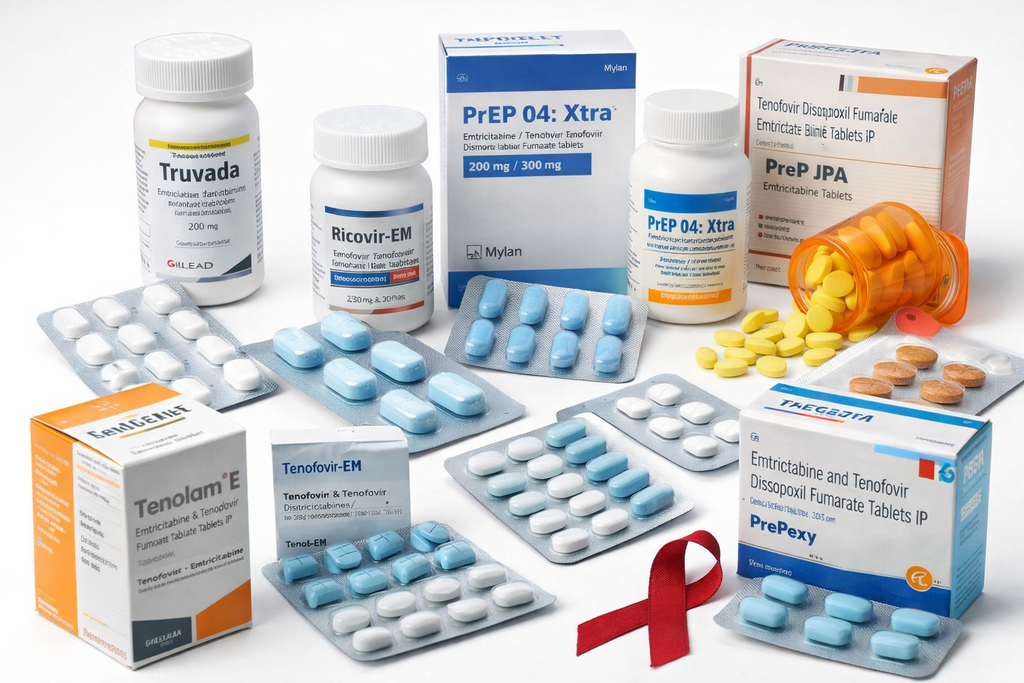
Beyond the Pill: How Innovation Is Reshaping the Future of HIV Prevention
By Dr. Nozithelo Moyo
Introduction
Human Immunodeficiency Virus (HIV) is no longer the diagnosis it once was. What was once considered a fatal disease is now a manageable chronic condition—and increasingly, a preventable one.
Driven by pharmaceutical innovation, HIV care has evolved beyond daily oral therapy to include long-acting injectables, pre-exposure prophylaxis (PrEP), and ongoing vaccine research. However, the impact of these advances remains uneven globally, particularly across African settings where the burden is highest.
The Global Burden of HIV
Despite major advancements, HIV continues to pose a significant global health challenge.
Approximately 39 million people were living with HIV globally in 2023, with around 1.3 million new infections occurring annually. Sub-Saharan Africa remains disproportionately affected, accounting for nearly two-thirds of global cases.
This disparity highlights the need for solutions that are not only innovative but also accessible and adaptable to diverse healthcare systems.
HIV Treatment: From Fatal to Chronic Disease
Antiretroviral therapy (ART) has transformed HIV into a manageable chronic condition.
Standard first-line regimens typically include two nucleoside reverse transcriptase inhibitors combined with an integrase strand transfer inhibitor. The tenofovir, lamivudine, and dolutegravir (TLD) regimen is widely used across Africa due to its high efficacy, low resistance rates, and cost-effectiveness.
In many African countries, ART scale-up has significantly improved outcomes. However, challenges such as late diagnosis, drug stock-outs, and limited rural access persist.
Clinical Insight:
Early initiation of ART leads to viral suppression, improved survival, and reduced transmission (Undetectable = Untransmittable).
PrEP: A Shift Toward Prevention
Pre-exposure prophylaxis (PrEP) represents a major shift from treatment to prevention.
PrEP involves the use of antiretroviral medications to prevent HIV infection before exposure. Common regimens include tenofovir-based combinations, which, when taken consistently, can reduce transmission risk by up to 99% in sexual exposure.
PrEP in Africa: Opportunities and Challenges
Despite its effectiveness, PrEP uptake in many African settings remains limited.
Key barriers include:
Limited awareness
Stigma associated with HIV prevention
Misconceptions about PrEP promoting risky behavior
Challenges in accessing healthcare services
Emerging solutions include community-based education, integration into primary healthcare, and the introduction of long-acting injectable PrEP.
Clinical Insight:
Long-acting PrEP may significantly improve adherence in settings where daily medication is difficult to maintain.
Emerging HIV Therapies and Innovations
Recent pharmaceutical developments are focused on improving convenience, adherence, and treatment outcomes.
These include:
Long-acting injectable ART (e.g., cabotegravir and rilpivirine)
Capsid inhibitors such as lenacapavir, administered biannually
Broadly neutralizing antibodies targeting multiple HIV strains
While these innovations are promising, challenges such as cost, distribution logistics, and healthcare infrastructure remain barriers to widespread implementation.
HIV Vaccine Development: Progress and Complexity
Developing an effective HIV vaccine remains one of the most complex challenges in modern medicine due to high mutation rates and viral diversity.
Current research focuses on mRNA platforms and broadly neutralizing antibodies, with Africa playing a critical role in clinical trials.
However, ethical considerations, community trust, and equitable access remain essential to successful implementation.
Accessibility and Global Inequities
Despite scientific progress, access to HIV prevention and treatment remains unequal.
Global organizations such as the World Health Organization and UNAIDS continue to work toward ambitious targets, but structural barriers persist, particularly in low-resource settings.
Clinical Perspective: Bridging Innovation and Reality
From a clinical standpoint, one of the greatest challenges is not scientific—it is practical.
Patients may delay seeking care, stigma continues to influence decision-making, and preventive tools such as PrEP remain underutilized.
Bridging this gap requires:
Improved patient education
Community engagement
Strengthened healthcare systems
Conclusion
HIV care has entered a new era defined by innovation, prevention, and possibility. However, the success of these advances depends on their ability to reach those most affected.
For regions such as sub-Saharan Africa, the future of HIV management lies not only in scientific breakthroughs but in ensuring equitable access and effective implementation.
References
- World Health Organization. Global HIV statistics, 2023.
- Centers for Disease Control and Prevention. Pre-Exposure Prophylaxis (PrEP) effectiveness.
- Delany-Moretlwe S, et al. Cabotegravir for HIV prevention. N Engl J Med.
- Segal-Maurer S, et al. Lenacapavir in multidrug-resistant HIV. N Engl J Med.
- Corey L, et al. HIV vaccine research challenges. Sci Transl Med.
- UNAIDS. Global AIDS Update Report